Study Abroad Programs 2026: The Ultimate Guide to Success
Are you dreaming of an international education? Study abroad programs allow international students to pursue degrees in foreign countries by securing admission, obtaining a student visa, and managing finances, typically requiring 12-18 months of preparation.
In my experience, success hinges not on luck, but on a strategic, well-documented plan.
I have helped thousands of students navigate this complex landscape over the last decade. You must treat your application as a professional project rather than a casual wish.
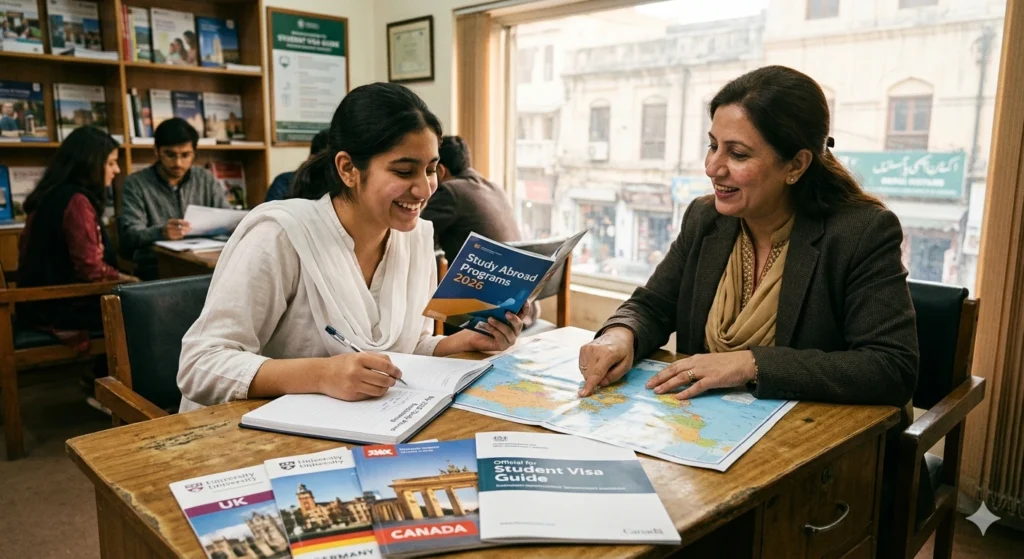
Understanding Study Abroad Trends in 2026
The landscape of international education is evolving rapidly. Prospective students now face a more competitive environment than ever before. Universities in 2026 place a higher value on “holistic profiles” over mere test scores. They seek students who demonstrate leadership, resilience, and a clear purpose.
The Rise of Future-Focused Degrees
Industry demand is currently shaping academic pathways. Students increasingly choose programs in Artificial Intelligence, Sustainability, Data Science, and Cybersecurity. These fields offer the highest return on investment. Furthermore, universities are integrating hybrid learning models. You might find programs that combine on-campus research with remote global collaboration.
Emerging Study Abroad Destinations
Traditional powerhouses like the USA, UK, Canada, and Australia remain dominant. However, students are diversifying their choices. Countries like Germany, the Netherlands, and Singapore are gaining traction. These nations offer robust industry connections and tuition-friendly policies. You should consider these alternatives if you want high-quality education without the premium price tag.
Your Roadmap to Study Abroad Programs
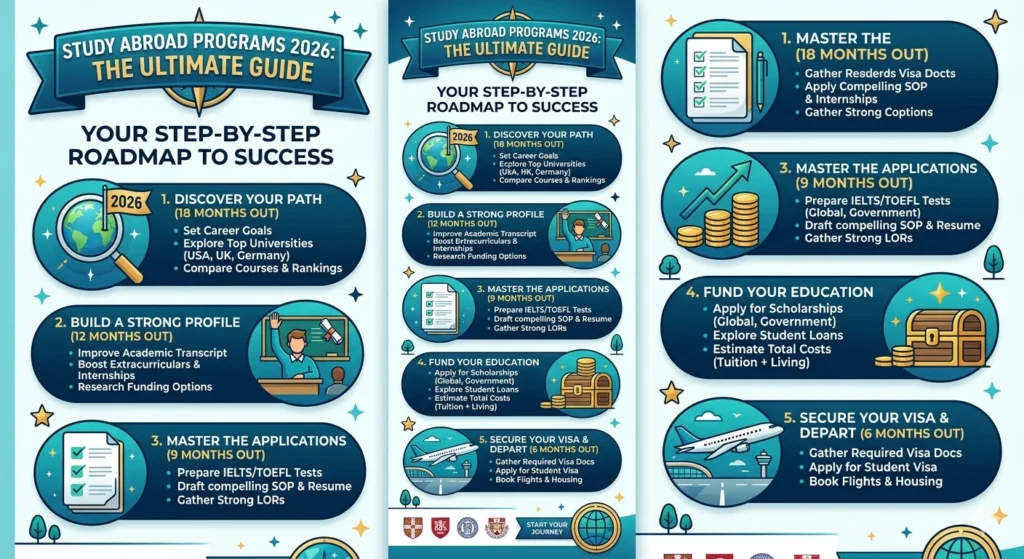
You must build a strategic plan early. I recommend starting your research at least 18 months before your intended start date. This timeline allows for test preparation, profile building, and financial planning.
Why Early Preparation Matters
Admissions teams review thousands of applications annually. They prioritize candidates who demonstrate consistency in their academic and extracurricular journeys. You should focus on building your profile during your undergraduate years or high school. Engage in internships, research projects, and volunteer work that align with your intended field of study.
Aligning Career Goals with Academic Choices
Do not select a university based solely on global rankings. Instead, evaluate the program’s alignment with your career aspirations. Does the curriculum offer practical, hands-on experience? Does the university provide strong alumni networks and career services?
“An investment in knowledge pays the best interest.” — Benjamin Franklin
This famous saying remains true today. Your education is a long-term asset. Choose programs that equip you with skills for the future economy.
Step-by-Step Application Checklist
Staying organized is the key to managing your study abroad process. Use this checklist to keep your application on track.
- Phase 1: Research and Shortlisting (Months 1-3)
- Identify your top 5-8 target universities.
- Review specific program requirements and deadlines.
- Assess your budget, including tuition and cost of living.
- Phase 2: Test Preparation and Documentation (Months 4-6)
- Schedule required language proficiency tests (IELTS, TOEFL, or Duolingo).
- Request official academic transcripts from your current or former institutions.
- Draft your Statement of Purpose (SOP) and gather Letters of Recommendation (LOR).
- Phase 3: Submission and Visa (Months 7-12)
- Submit your applications through the university portals.
- Monitor your email for interview invitations.
- Receive your official acceptance letter.
- Apply for your student visa immediately after receiving your Confirmation of Enrollment (CoE).
Best Study Abroad Programs
Below we have curated a list of 30 in-demand programs for study abroad in 2026. These fields are selected based on global workforce trends, high ROI, and future job growth projections.
Technology & Digital Innovation
- Artificial Intelligence (AI): Developing neural networks and intelligent systems.
- Machine Learning: Building predictive models and automation algorithms.
- Data Science: Extracting actionable insights from complex, large-scale datasets.
- Cybersecurity: Protecting digital infrastructure and corporate networks.
- Cloud Computing: Managing scalable architecture and virtual infrastructure.
- Software Engineering: Designing and maintaining robust application systems.
- User Experience (UX) Design: Optimizing human-computer interaction for digital products.
- Blockchain Technology: Developing secure, decentralized ledger systems.
Healthcare & Life Sciences
- Nursing (BSN/MSN): Critical, patient-centered care and clinical expertise.
- Healthcare Administration: Managing hospital operations, policy, and public health systems.
- Biotechnology: Engineering biological processes for medical and agricultural innovation.
- Public Health: Analyzing community-wide health outcomes and disease prevention.
- Pharmaceutical Sciences: Drug development, testing, and regulatory compliance.
- Dentistry: Specialized clinical care with high international demand.
- Biomedical Engineering: Merging biology and engineering to create medical devices.
Business & Global Management
- Business Analytics: Using statistical methods to solve business problems.
- International Business: Navigating global markets, trade, and cross-cultural strategy.
- Finance & FinTech: Managing capital, investment banking, and digital financial systems.
- Supply Chain Management: Optimizing global logistics and operational flow.
- Marketing & Digital Strategy: Consumer behavior, brand management, and SEO.
- Entrepreneurship: Launching and scaling ventures in a global economy.
Engineering & Infrastructure
- Renewable Energy Engineering: Designing solar, wind, and green technology systems.
- Civil Engineering: Infrastructure design, urban planning, and sustainable construction.
- Electrical Engineering: Power grids, automation, and micro-electronics.
- Mechanical Engineering: Robotics, manufacturing, and advanced machine design.
- Environmental Engineering: Waste management, water quality, and pollution control.
Social Sciences, Law & Humanities
- International Relations: Global diplomacy, trade agreements, and geopolitics.
- Law (LLM/JD): Specializations in human rights, trade, or intellectual property.
- Psychology: Behavioral science, mental health, and organizational psychology.
- Digital Media & Communications: Content strategy, public relations, and global media.
Pro-Tips from the Field
I have gathered these insights from years of counseling students. Use them to gain a competitive edge.
- Tailor Every SOP: Never use a generic template. Admissions officers can spot a copied essay instantly. Explicitly mention why that specific university and that specific program are the only ones for you.
- Secure Funding Early: Many students wait until the last minute to apply for scholarships. Search for university-specific grants, government-funded programs, and private scholarships the moment you start your research.
- Build a “Safety” List: Always include a mix of “Dream,” “Match,” and “Safety” schools. This strategy ensures you have options regardless of the competitive outcome.
Common Mistakes to Avoid
Even smart students make preventable errors. Avoid these pitfalls to protect your application.
Ignoring Visa Timelines
Visa processing times fluctuate significantly. Some students make the mistake of waiting for their visa until the last month. You must check the embassy processing times in your specific region. Delays here can result in missed semesters.
Mismanaging Financial Documentation
Embassies require proof of funds to ensure you can support yourself. Incomplete bank statements or insufficient liquid assets lead to automatic refusals. Always ensure your funds are verified, dated, and meet the specific criteria of the destination country.
Failing to Research Local Laws
Adapting to a new country involves more than just academics. Research local customs, housing laws, and part-time work regulations before you arrive. This preparation prevents legal or social friction during your stay.
Frequently Asked Questions about study abroad programs
How early should I start planning my 2026 application?
I strongly advise beginning your research at least 12 to 18 months in advance. This lead time allows for test prep, document gathering, and scholarship applications. You avoid the stress of tight deadlines and increase your chances of success.
Is the Statement of Purpose (SOP) really that important?
The SOP is arguably the most critical component of your application. It acts as your voice in the decision-making room. A well-structured SOP proves your intent, motivation, and fit for the program.
Can I work while studying abroad?
Most countries allow international students to work part-time during their studies. However, regulations vary significantly by country and visa type. You must verify the specific work rights attached to your student visa before you arrive.
What are the main components of a study abroad budget?
Your budget must cover tuition fees, health insurance, housing, food, and transport. You should also include an emergency fund for unexpected expenses. Always factor in currency fluctuations if you are paying in a foreign currency.
Do I need an education consultant?
You can manage the process yourself if you are organized and diligent. However, a consultant can provide valuable insights into visa policy changes and university preferences. They act as a safeguard against common mistakes.
How do I choose between two equally good universities?
Look at the specific curriculum, faculty research, and post-study work opportunities. Reach out to current students or alumni on professional networks to ask about their experience. The “vibe” and career outcomes often differentiate the best choice for you.
What should I do if my visa is rejected?
Do not panic if you receive a rejection. First, analyze the reason provided by the immigration office. You can usually reapply after addressing the specific issues, such as financial documentation or weak intent. Consult an expert to help fix the gaps in your file.
Are there scholarships for international students?
Yes, many universities offer merit-based scholarships. Additionally, several governments and private organizations provide grants. Start your search early, as these funds are highly competitive and limited.+1
Is it hard to adapt to a new culture?
Cultural adjustment is a normal part of the international student experience. You might feel homesick initially, but you will soon adapt. Most universities offer counseling and international student support groups to help you settle in.
What is the biggest trend in study abroad for 2026?
The biggest trend is the shift toward “skill-based” education. Universities are focusing heavily on employability and internships. They want students who are not just academically strong but also prepared for the global workforce.
Conclusion: Your Journey Awaits
Studying abroad is more than a degree; it is a transformative experience. You will gain independence, cultural perspective, and global networks that last a lifetime. While the process may seem overwhelming, it becomes manageable with the right strategy and preparation. Do not let fear or complexity hold you back. Start your research today, stay organized, and take that first step toward your global future. If you are ready to take your education to the next level, I encourage you to begin your application checklist immediately. Your international career starts with your first bold decision.
Official website for study abroad programs
| Destination | Official Government/Educational Resource | Purpose |
| USA | EducationUSA | Official U.S. State Dept. guidance for international students. |
| Canada | EduCanada | Official government source for programs, scholarships, and living. |
| UK | GOV.UK (Student Visa) | Official portal for visa requirements, rules, and procedures. |
| Australia | Study Australia | Official government site for courses, visas, and living in Australia. |
| Germany | DAAD | Official service for academic exchange, scholarships, and university info. |
| Global | QS Top Universities | Leading independent source for global university rankings. |
| Global | Times Higher Education | Trusted source for university performance data and rankings. |

Englopak is Pakistan’s premier gateway for international education, career development, and language proficiency. Founded on the principle of bridging the gap between local potential and global excellence, we provide a 360-degree ecosystem for students and professionals aiming for the USA, UK, Germany, Norway, and beyond.
Furthermore, we understand that a global journey is more than just an application—it is a life-changing transition. Consequently, we prioritize technical accuracy in document attestation, financial certification, and interview preparation.
At Englopak, your global future isn’t just a dream—it’s a plan.
Phone Numbers
1. Rawalpindi : 0315 9117529
2. Islamabad: 0315 9956772
3. Peshawar: 0342 0092051
Info@englopak.com
Englopakdigital@gmail.com
Englopakinstitutes@gmail.com