Finding a high-quality education in the United States doesn’t always have to come with a six-figure price tag. For the 2026 academic year, many public and private institutions across the Midwest and Southern regions are offering competitive tuition rates specifically designed to attract global talent. By looking beyond the famous Ivy League names, international students can find accredited, top-tier programs at universities that prioritize affordability without compromising on the student experience or post-graduation job prospects.
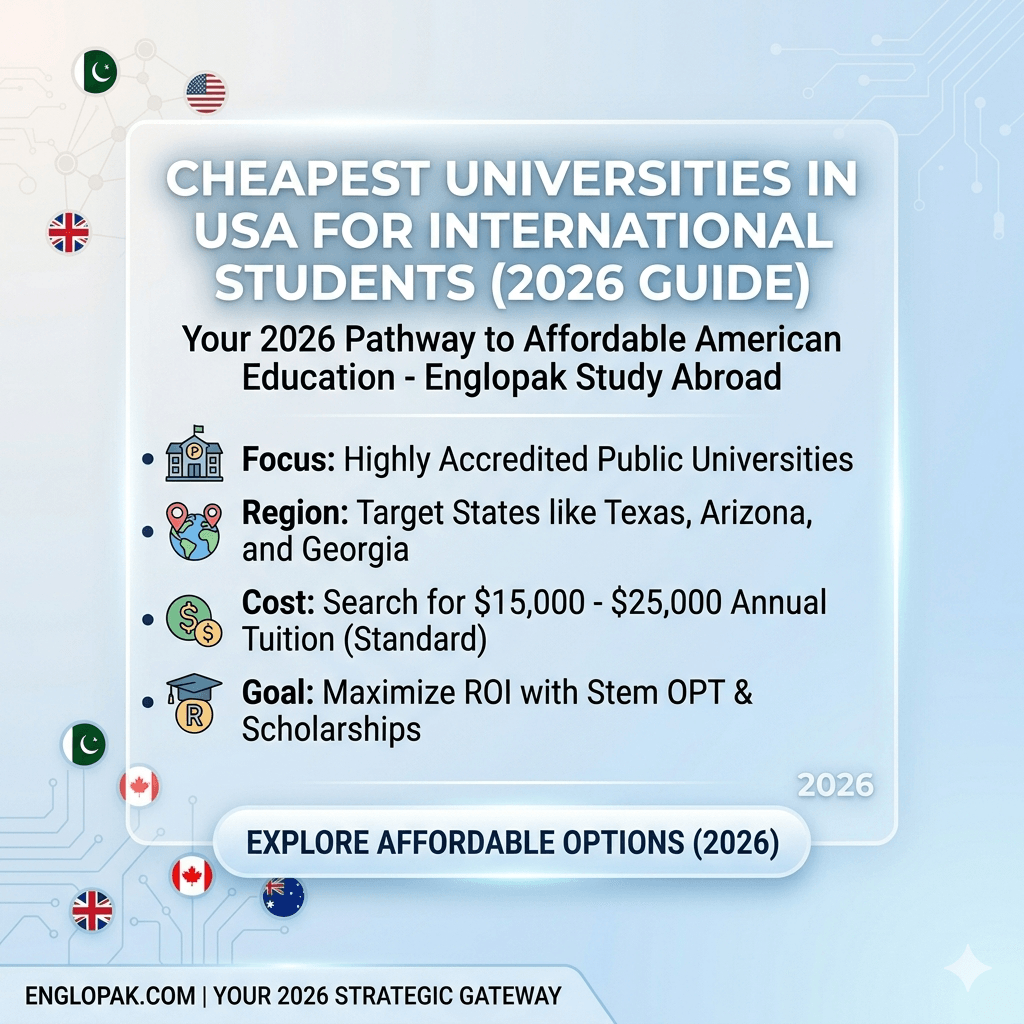
Selecting the right university involves more than just looking at the sticker price; it’s about understanding the total cost of attendance. This includes not only tuition but also living expenses, health insurance, and specialized fees that may apply to international applicants. In 2026, states like Mississippi, South Dakota, and Minnesota continue to lead the way by offering “flat-rate” tuition or significant out-of-state fee waivers, making the dream of studying in the USA a financial reality for students from all over the world.
Key Factors for Finding Affordable US Universities
- Target State Schools: Public universities in states like Mississippi and North Dakota often have lower base tuition for non-residents.
- The 2+2 Pathway: Consider starting at a community college for two years before transferring to a university to save up to 50% on total costs.
- In-State Fee Waivers: Some universities offer scholarships that allow international students to pay the same low rate as local residents.
- Regional Selection: Focus on the Midwest and South, where the cost of living (rent, groceries, utilities) is significantly lower than in New York or California.
- Work-Study Opportunities: Most international students on an F-1 visa can work up to 20 hours per week on campus to help cover personal expenses.
Ranking of Cheapest Universities in USA (2026 Estimates)
| University Name | Location | Estimated Annual Tuition (USD) | Popular Programs |
| Mississippi Valley State University | Mississippi | $7,500 – $8,200 | Business, Education, STEM |
| Minot State University | North Dakota | $8,500 – $9,300 | Nursing, Criminal Justice |
| Brigham Young University (BYU) | Utah | $6,500 – $13,000 | Engineering, Management |
| Delta State University | Mississippi | $9,500 – $10,200 | Aviation, Music Industry |
| Southwest Minnesota State University | Minnesota | $9,800 – $11,000 | Agriculture, Business |
| Dakota State University | South Dakota | $11,500 – $12,500 | Cyber Security, IT |
| Southeast Missouri State University | Missouri | $13,000 – $14,500 | Computer Science, Arts |
| Nicholls State University | Louisiana | $9,000 – $10,500 | Culinary Arts, Nursing |
| Alcorn State University | Mississippi | $8,200 – $9,500 | Biology, Agriculture |
| University of Central Missouri | Missouri | $14,000 – $15,500 | Technology, Aviation |
Frequently Asked Questions (FAQs)
1. Which university has the lowest tuition for international students in 2026?
Currently, Mississippi Valley State University and Minot State University are among the most affordable, with annual tuition often falling below $9,000 for international undergraduates.
2. Can international students get full scholarships in the USA?
Yes, but they are highly competitive. “Full-ride” scholarships (covering tuition and living) are usually offered by prestigious private colleges or specific state-funded merit programs.
3. Is it cheaper to study at a Community College first?
Absolutely. Many international students use the 2+2 model, attending a community college for $5,000–$8,000 a year and then transferring to a four-year university for their final two years.
4. Are there universities with no application fees?
Yes, several universities like Trine University or Southwestern University frequently waive application fees for international students to encourage more global applications.
5. What is the average cost of living for a student in the USA?
In affordable states (like Oklahoma or Kansas), you should budget roughly $10,000–$15,000 per year for housing, food, and personal expenses.
6. Do I need to pay for health insurance separately?
Most US universities require international students to have health insurance. This typically costs between $1,500 and $3,000 per year and is often added to your university bill.
7. Which states are the cheapest to live in for students?
Mississippi, Oklahoma, Kansas, Arkansas, and Missouri consistently rank as the states with the lowest cost of living in 2026.
8. Can I work while studying in the USA?
Under an F-1 Visa, you are permitted to work on-campus for up to 20 hours per week during semesters and full-time during breaks.
9. Are MS programs cheaper than Undergraduate programs?
Not necessarily. While some Master’s degrees have fewer credits, the “per-credit” cost for graduate school is usually higher than for undergraduate courses.
10. Does “cheap” mean the quality of education is low?
Not at all. Most affordable public universities are regionally accredited, meaning they meet high academic standards and their degrees are recognized globally by employers.
Official Resources for Further Research
- EducationUSA (State.gov): https://educationusa.state.gov
- U.S. News & World Report Education: https://www.usnews.com/education
- College Board (BigFuture): https://bigfuture.collegeboard.org
- Study in the States (DHS): https://studyinthestates.dhs.gov
- IIE Open Doors Report: https://opendoorsdata.org
Englopak is Pakistan’s premier gateway for international education, career development, and language proficiency. Founded on the principle of bridging the gap between local potential and global excellence, we provide a 360-degree ecosystem for students and professionals aiming for the USA, UK, Germany, Norway, and beyond.
Furthermore, we understand that a global journey is more than just an application—it is a life-changing transition. Consequently, we prioritize technical accuracy in document attestation, financial certification, and interview preparation.
At Englopak, your global future isn’t just a dream—it’s a plan.
Phone Numbers
1. Rawalpindi : 0315 9117529
2. Islamabad: 0315 9956772
3. Peshawar: 0342 0092051
Info@englopak.com
Englopakdigital@gmail.com
Englopakinstitutes@gmail.com